Pages

Friday, August 28, 2020

Rules for Voting Like a Christian

      Let us therefore make every effort to do what leads to peace and to mutual edification. Do not destroy the work of God… 

     So whatever you believe about these things keep between yourself and God.

-Romans 14:20, 22 (NIV)


We’re entering that time in America when we celebrate our democracy by elevating our own


opinions and mocking, belittling, and openly antagonizing those who have different ones. 

     You know, Presidential election season.

     Every four years, we elect a new President. It doesn’t seem so unusual now, but when our system was created there weren’t a lot of other examples of working representative governments to go by. It’s kind of remarkable that the voice of the people can so easily unseat those in power. From my perspective, it’s one of the most admirable things about our country.

     Unfortunately, it can also cause us to act like complete jerks to each other.

     I know of longtime friends who can’t discuss political topics at all. I know families divided along party lines. Sadly, I know of relationships destroyed because someone said something they couldn’t take back in a political argument. All of that’s bad enough.

     Worse, though: I know of people who are made to feel as though they don’t belong in a church because they don’t fit with the political ideologies of the majority of the congregation. Some churches have become politically monolithic for that very reason. And, sadly, there are people concluding that Christianity has nothing for them because they can’t reconcile the political opinions they’ve heard voiced in the church with their own convictions.

     Maybe it’s comforting, in a way, to know that the church was dealing with the tension between competing opinions and ideologies from the beginning.

     The Roman Empire, where the church was born and came of age, probably didn’t encourage a lot of political debate. It was an empire, after all. There wasn’t much dialogue about public policy; more like a monologue that began and ended with Caesar. The church likely wasn’t too divided over political parties.

     But there was division. In the early days, the church was made up of Jews and Gentiles trying to do what was unprecedented: get along while regarding each other as the people of God. In many ways, their cultures were quite different. They had different views on morality and different ways of thinking about God. While Jewish monotheism and Messianic expectation provided the theological foundation for Christianity, there were many other matters on which there wasn’t wide agreement. Paul deals with two of those matters in Romans 14 and 15: what kinds of food are acceptable and whether or not the observance of Jewish holy days was required of non-Jewish Christians.

      This particular debate, for us, sounds awfully strange and not very relevant. Oh, occasionally we’ve applied Paul’s advice in these two chapters to our own debates and differences of opinion, but more often than not we’ve kind of ignored what he says here on matters that are really important to us. I’m convinced, though, that it’s in dealing with those matters that we care about the most that we most need to listen. And, to me, the one phrase that resonates as the church falls victim over and over again to the temptation to divide over political matters is this one: “whatever you believe about these things keep between yourself and God.”

     There are matters about which debate isn’t worth the damage it can do. The church should be about kingdom work. It’s OK for Christians to disagree about some things. No one should be placed in a position in which they have to choose between a violation of their conscience and a relationship with a brother or sister in Christ. So sometimes we ought to be quiet. Sometimes it’s enough that God knows what we believe. It’s more important to love your brothers and sisters than to win an argument or get your opinions vindicated. 

     With that, let me make some suggestions as to how we should approach election season in the church. None of these suggestions require that you change your convictions or adopt the other parties’ platforms or candidates. You can still vote in the way you think the Lord wants you to — or not vote at all, if you prefer. 

     So, without further ado, here are my suggestions for navigating election season in church with grace, love, and kingdom values:

  • Never succumb to the temptation to make political discussions personal. For a Christian, no discussion of politics should ever descend to the level of name-calling, character assassination, or the impugning of motives — either in person or on social media. That should be obvious. Clearly, it isn’t. Remember: Election season doesn’t invalidate “Make every effort to do what leads to peace and mutual edification.”
  • Remember your primary citizenship. You are not first and foremost an American, not if you’re in Christ. There will be ways in which American values and priorities are out of step with the Kingdom of God. The highest good is not to save America, or that America thrives. The highest good is God’s Kingdom.
  • Don’t buy into the myth that politics will save us. God certainly can and does use politics and politicians to do his work in the world. But that’s a far cry from saying that his work relies on the right policy or the right woman or man in office. If you believe he can work through one party, then you have to believe he can work through the other one, too. Point being that who we vote for is far less important to God’s work than we might tend to think, and far less important than loving your neighbors, seeking justice and righteousness, and living humbly with God.  
  • Mainly, try to be quiet about political matters. I know, this is a tough one. As Americans, we have the right to express our opinions. But as Kingdom people, we have the obligation to give up our rights for the sake of others. If expressing your opinions causes someone to be injured, to leave the church, or to not hear the gospel, then what have you gained? 
  • Finally, when you do have to speak up, speak up for kingdom matters: righteousness, peace, and joy in the Holy Spirit. No political party has a monopoly on those matters. Every politician falls short of them. Instead of party or candidate, speak up for people who are in need, people who are marginalized, people who are trying to be heard. Give yourself — guided by the Holy Spirit, not a party or candidate — to those issues that will promote righteousness, bring about peace, and allow our world to know the joy of God’s kingdom. 

     You may disagree with some — or all — of these suggestions. It would be the height of hypocrisy for me not to give you that freedom. But may we always disagree with grace, with compassion for where differing opinions might come from, and with faithful love that isn’t affected by partisanship.

     May we be Christians first, voters second. 

     And may we give grace to those who vote the other ticket. 

Friday, August 7, 2020

When God Gets A Hold of You...

 I am obligated  both to Greeks and Non-Greeks, both to the wise and the foolish. That is why I am so eager to preach the gospel…. 

     For I am not ashamed of the gospel,  because it is the power of God  that brings salvation to everyone who believes: first to the Jew, then to the Gentile. For in the gospel the righteousness of God is revealed — a righteousness that is by faith from first to last, just as it is written: “The righteous will live by faith.”

-Romans 1:14-17 (NIV)


Photo Courtesy of The Christian Chronicle


Earlier this week, I got word that Jimmy Allen had died. 

     You might not know who that is. In the 60s and 70s, he was arguably the best-known evangelist among Churches of Christ. Allen traveled around the country holding evangelistic meetings — around 1400, by his estimate, resulting in about 10,000 baptisms. His style might not be very popular today — arguably his most famous sermon is called What Is Hell Like? — but the fire and brimstone he preached at his meetings was intended to give his audiences a chance to hear and respond to the Gospel of God’s love.

     In his own words, Allen believed the Gospel “was too good for me to keep my mouth shut.” He meant that, too. He shared it in front of audiences of thousands, but he also shared it on airplanes, in restaurants, at his kids’ school. He even said that he regularly picked up hitchhikers just so he could talk to them about Jesus.  (Wonder if any of them asked to be let out of the car short of their destination?)

     “Seems to me like this is what Christians are supposed to be doing,” he would say.

     By the time I knew Jimmy Allen, it was as a Bible professor at Harding University, where he taught for about 40 years. Every one of those years, I guess, he taught the book of Romans. The joke at Harding was that Paul the apostle — who wrote the book — couldn’t manage better than a B+ in Allen’s Romans class. (I will neither confirm nor deny that I got an A.)

     I didn’t know much about Dr. Allen’s background; I think most of us secretly believed he sprang fully-formed and preaching from his father’s forehead or something. I’ve since learned that he never knew his father, and that his mother was killed in an accident when he was still a boy. He grew up in rural Arkansas, cared for by his grandmother and working in the fields to earn a few cents. He didn’t know Christ until he came to school at what was then Harding College. Maybe his background made him that much more ready to hear the story of God’s unconditional love in Jesus. When he heard it, it changed him, and he never seemed to want anything more than to see it change others.

     Allen emphasized God’s grace in that Romans class. For some of us, the idea that we’re saved because God is full of grace — and not because we get everything right — was, well, a revelation. I can remember him saying, passionately, “If you get a hold of Romans, God will get a hold of you.” It was obvious to anyone who heard him preach, or who took that Romans class with him, that God had gotten a hold of Jimmy Allen.

     I guess that’s why he also said, often, “I would rather teach Romans than eat when I’m hungry.” He wanted God to get a hold of his students as well. 

     Despite his reputation as a fire-and-brimstone preacher, Allen was a person of great kindness and grace. I recall him saying at least once that he never believed anything bad that he heard about someone, and that if the person ever proved that it was true, he didn’t delight in it. That kind of spirit is in short supply in our world, and sometimes hard to find even in the church. But I believe it’s the way of Christ.

     I was hyper-sensitive to traditionalism when I took Dr. Allen’s Romans class. I was young, thinking I knew it all and especially where the Old Guard was wrong. I probably thought Dr. Allen was one of the ultra-conservative Old Guard; wrongly, as it turned out. He sort of messed up my “Liberal/Conservative” map, and it finally dawned on me why when I heard him in class one day take down people who bragged about not having  changed any of their views on the Bible in twenty-five years. He called people who make that claim stagnant, and dared to say that they hadn’t spent much time in the Bible in that quarter century. In saying that, he was stepping on the toes of some of his colleagues. But it was nice to hear him say that it was to be desired that the Bible change our minds the longer we study it. “In teaching others, we are continually asking them to change from error to truth,” he said. “We should be willing to practice the same.” I’ve never forgotten that. My thinking about some things — maybe a lot of things — has changed in the years since I knew Dr. Allen. He probably wouldn’t have agreed with all the changes, and I’ve come to believe he was mistaken about a few things too. If anything, though, I appreciate the gospel that changed his life even more than I did back then. And maybe that’s the best way to evaluate changes in your views: Do they help you to better understand, appreciate, and internalize the wonderful story of Jesus?    

     That story was always, to Dr. Allen, about more than salvation from his sins. He understood that the gospel calls us to be colonists of the kingdom, instruments of God’s healing in the world. In the Sixties, when it was far from popular in the south to be committed to racial equality, Dr. Allen was publicly supportive of civil rights. He used his pulpit as one of the most well-known evangelists in Churches of Christ to bring the issue of racism to light. I imagine it cost him some meetings, but to him it wasn’t secondary to the good news of God’s grace. For him, it was obvious that if we’re all saved because of God’s favor toward us, then none of us are more than or less than any other person. 

     Jimmy Allen’s life reminds me of the obligation we have as believers, gospel-formed people, to preach that good news to all people. Sharing the gospel is not a good idea; it’s a responsibility. It’s what Christians are supposed to be doing. You won’t do it like I do. I don’t do it like Dr. Allen did. Jesus wants the gospel proclaimed in your voice, performed in your actions, and no one can do that better than you. 

     The gospel reveals God’s righteousness, Paul says. It shows us that, in spite of our unrighteousness, God is faithful from beginning to end. “While we were still sinners, Christ died for us,” he says. Through Christ, God demonstrated beyond a shadow of a doubt that he is righteous and can be trusted to act in love toward us, no matter what.

     Dr. Allen’s obligation is finished. His duties are discharged. Many, many people heard of the faithfulness, righteousness, and love of God as seen in Jesus Christ. May we follow his example in never being ashamed of that good news. May we never discriminate, but proclaim it to all people, believing that it is the power of God for salvation. Our words. Our actions. But when they tell that story, they are filled with God’s power.

     If God has gotten a hold of you, tell it.  

Friday, July 31, 2020

Jesus Photo


…What we preach is not ourselves, but Jesus Christ as Lord, and ourselves as your servants for Jesus’ sake. For God, who said, “Let light shine out of darkness,” made his light shine in our hearts to give us the light of the knowledge of God’s glory displayed in the face of Christ.

     But we have this treasure in jars of clay to show that this all-surpassing power is from God and not from us.

-2 Corinthians 4:5-7 (NIV)


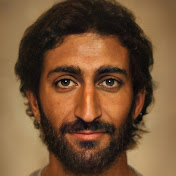
Earlier this month, Dutch artist Bas Uterwijk released a “photo” of Jesus. 

     Uterwijk’s Jesus “photo” was part of a series he did of historically significant men and women who lived before photo technology was available. Using artistic renditions like paintings, statues, and icons as source material, he utilized an artificial intelligence program to create digital photorealistic images.

     It wasn’t immediately clear what source or sources Uterwijk used to produce his Jesus portrait, though some people saw hints of the Christ Pantocrator icon at St. Catherine’s monastery on Mount Sinai. Here’s what he came up with:


Uterwijk had a problem with Jesus that he didn’t have with his other subjects, like Van Gogh, Napoleon, George Washington, or Queen Elizabeth I — historical accuracy is impossible. The earliest known artistic representation of Jesus dates to about 200 years after his death. (It shows Jesus as a Greek philosopher type, suggesting that historical accuracy wasn’t particularly important to the artist!) The gospels tell us next to nothing about his appearance — just a little about his clothing. About the closest we come in Scripture to a description of Jesus is from Isaiah’s suffering servant prophecy, and if he really was describing what Jesus would look like 800 years or so later (which I doubt), all he says is that he wasn’t much to look at.

     So Uterwijk’s AI was left with a bunch of representations of Jesus that show what their artists thought he looked like. Artists have always said more about themselves in the way they represent Jesus than they have their subject. Uterwijk gave his Jesus the skin tones he imagines a man living in first-century Palestine would have had, but of course that’s debatable. (I read a comment online from a woman who suggested that Paul, at least, would have been darker since he was mistaken for an Egyptian — an African — in the book of Acts.) He also gave Jesus shorter hair than his computer did, thinking that would have been more typical for a man of that era.

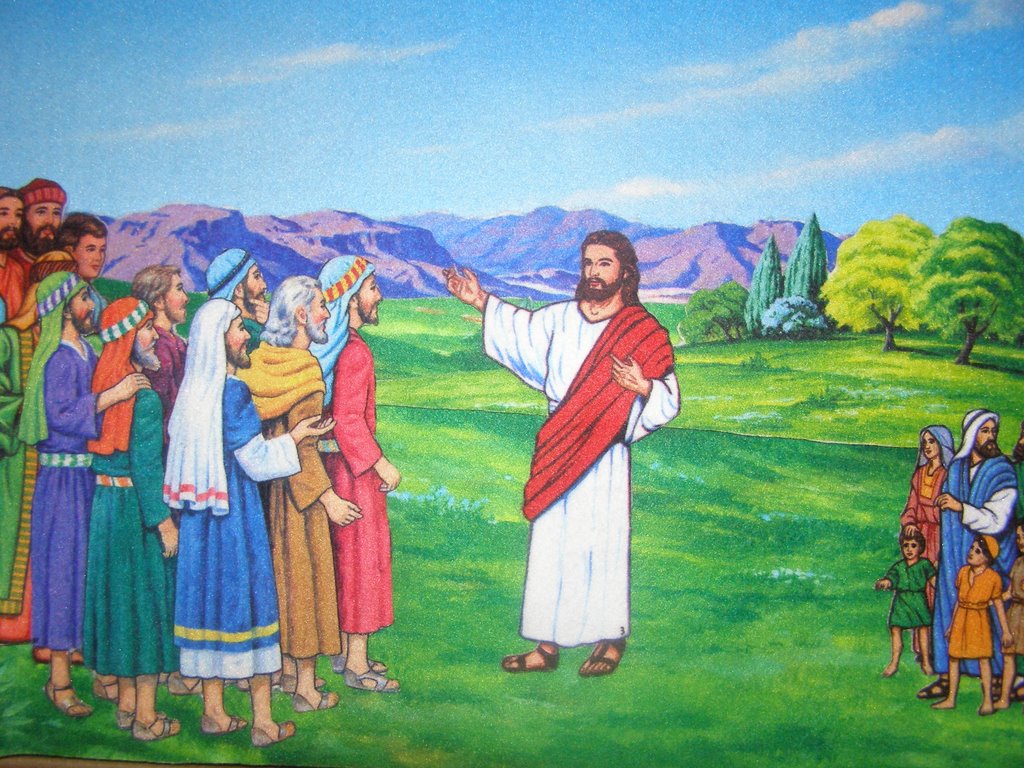
     We probably can’t escape the preconceptions we have in our minds of what Jesus looked like. As a kid, I remember Jesus looking a lot like this: 


     Later, I became acquainted with this image of Jesus, The Head of Christ by Warner
Sallman, commissioned by the 1940 graduating class of North Park Theological Seminary, where I did my graduate work. It’s maybe the best-known image of Jesus in the world, despite the fact that it makes Jesus look pretty Nordic. I know Black Christians who grew up with an image of Jesus like this. Many of them just kind of went along with it. Some who grew up during the Civil Rights Movement wondered what it meant that Jesus looked like the people using fire hoses and batons and siccing dogs on marchers.
I’ve sometimes heard, “If God had wanted us to know what Jesus looked like, he would have told us,” and I suppose that’s true. But it might matter, might it not, for us to be clear about what he most likely didn’t look like — especially in a society that has such a history of injustice to those of darker pigment, even though we claim it doesn’t matter?

     Maybe the early Christians had it right: It seems there weren’t many representations of Jesus in the first couple of hundred years after his death because the early church applied the Old Testament’s prohibition of making an image of God to Jesus. Maybe our tendency to imagine Jesus looking a particular way can’t help but do violence to the point of incarnation. To imagine him as a painting, an icon, or even a photorealistic AI image might tend to make us forget that he lived among us, that he was a real person who ate and slept and sweated, that if Peter made him laugh while he drank it would have come out of his nose, and that if you didn’t know him you wouldn’t have been able to pick him out of a crowd in his place and time. 

     The Word became flesh and lived among us, and capturing an image of what that flesh looked like might have very little to do with whether or not he lives in us.

     More important than the question “What did Jesus look like?” is this one: “What does Jesus look like?” He should look a lot like us, right now, a lot like those of us who call ourselves Christ-ians and claim to follow him. The church are those who should be able to say “We always carry around in our body the death of Jesus, so that the life of Jesus may also be revealed in our body.” If Jesus’ life isn’t revealed in our lives, then in what sense can we call ourselves Christians?

     Maybe Jesus was darker than Uterwijk’s image. Whether he was or was not, he is living in the lives of many Black believers in our world today. In some places he looks white, in some places Asian, in some Latino, in some Mediterranean, Arab, Palestinian. He’s wherever his people are. He looks like they look.

     May he be seen clearly in each of us who go by his name.


Friday, July 24, 2020

God Doesn't Change

God is not human, that he should lie,
    not a human being, that he should change his mind.
Does he speak and then not act?
    Does he promise and not fulfill?
-Numbers 23:19 (NIV)


Everywhere you look, it seems like things have changed. Against our will. Under our noses.
Beyond what we could have imagined.
     For many of us, our jobs now involve the kitchen table and sweat pants.
     A night out means grilling in the back yard.
     A celebration means Zoom or a line of cars honking horns.
     Church no longer requires getting out of your pajamas.
     Those are the easy ones, of course. For some of us the changes include a lost job. A stay in the hospital and an uncertain long-term prognosis. Financial difficulties. The loss of a loved one to a virus whose name we didn’t even know when we wished each other a Happy New Year. 
     Some are stuck in a house with an abusive, angry spouse or parent. Some are trying to figure out how to stay sober in very stressful circumstances, and some are watching the hard-won sobriety of someone they love slipping away. Some are watching family members or friends with dementia or mental illness getting worse during this period of isolation. 
     Change is all around us. It’s in the air. Some of the changes were a long time coming and should have happened long ago. Some are sudden, shocking, and wrenching. As disorienting as it is, sometimes change is necessary, even vital, for the flourishing of human beings. Old attitudes that no longer work — some that should never have worked — have to go. Old traditions lose their meaning. Old practices have to be discarded. Old ideas are replaced by new ones. Muted voices are allowed to speak, while those that had the platform all to themselves have to learn how to share. Remembering the “good old days” usually doesn’t include remembering Jim Crow or polio or workhouses with fondness, and rightly so.
     As long as the way things are is working for us, we don’t care for change. Sometimes we don’t need any more reason to continue with something than this: That’s how it’s always been. That’s never true, of course. It hasn’t always been this way. What we mean is that it works for me, and it’s worked for others, and so let’s not change it. The second verse of Henry Lyte’s hymn, Abide With Me, captures well our feelings about change:  
Swift to its close ebbs out life's little day
Earth's joys grow dim, its glories pass away
Change and decay in all around I see
    Systems break down. Institutions outlive their purposes. People grow old. Viruses mutate. Change doesn’t always involve decay, but it does often enough. The things we once found joy in don’t do that for us anymore. What was beautiful turns to ashes. Life’s short day heads quickly toward sunset. 
     If you know Lyte’s song, though, you know I left out the last line of that second verse:
O Thou who changest not, abide with me!
     Theologians refer to one of God’s basic characteristics as immutability. You don’t need to remember that word, but you do need to remember the idea. In a world where change is inevitable, and very often necessary if there’s to be any real progress, it’s vital to our well-being to remember that God doesn’t change. It isn’t that he changes slowly and imperceptibly. It isn’t that he only changes in good ways. What theologians mean by immutability is that it’s part of God’s nature that he does not change, ever, for any reason. He doesn’t change his mind, or say one thing while intending another. His words and his actions are congruent. When he makes a promise, he keeps it — even if, as in the case of Abraham, the fulfillment takes generations. 
     James, the Lord’s brother, says it this way: “Every good and perfect gift is from above, coming down from the Father of the heavenly lights, who does not change like shifting shadows.” 
     Something to note about God’s unchanging nature is that in the Bible it’s expressed mostly in a relational way. That tracks with how God usually reveals himself: not abstractly, through a page in a theology textbook, but through the way he deals with human beings. So we understand and experience God’s immutability through God’s keeping of promises. We understand it through his generosity. We understand it through his compassion. Some theologians have argued about God’s immutability because he does sometimes seem to change in Scripture in one way: he has a tendency to forgive sin and change his mind about punishment. That only illustrates, though, that his compassion isn’t changed, even when his people fail him.
     God never changes in that he will always, without fail, seek to show us love, grace, kindness, and forgiveness. Nothing, not even his other fundamental characteristics like holiness or omniscience or omnipotence, change that fundamental thing about him. Whatever changes in your life — and everything will — you will find that God is faithful and will never change. That’s why John says that God is love, and later: “So we know and rely on the love God has for us.”
     To trust that God doesn’t change is to find the strength to accept change, however unsettling and disorienting it might be. We can’t expect our jobs or our families or our political party of choice to be the foundation we build our lives on forever. They’ll all change, evolve, let us down, even turn on us. God won’t. He’s faithful to us, he’s compassionate, and he always will be because he doesn’t change. 
     To trust that God doesn’t change is to have peace. That doesn’t mean, of course, that we’ll never be disappointed, or that we won’t grieve loss. It means we’ll always have a sanctuary, a place to which we can retreat and find shelter and security. It gives us a way to process change, to keep it in perspective.
     To trust that God doesn’t change is to have a way to evaluate the changes around us. That’s what Joseph does, for example, when he reflects on his brothers’ treatment of him, years later: “You meant it for evil, but God meant it for good.” Because he found that God was with him, unchanging, even is literally everything about his life dissolved around him, he was able to see how God’s work in his life came together.
     Ultimately, God has shown just how unchanging he is through Jesus. He showed his commitment to making himself known to us through the Word made flesh. He showed how unwavering that commitment is through the cross. “Father, forgive them; they don’t know what they’re doing!” — that was his prayer from the cross for those who put him there. Love, compassion, grace that wasn’t even changed by mockery, violence, and murder.
     Everywhere you look, it seems like things have changed. 
     Not God. Never God. 

Friday, July 17, 2020

The Idolatry of Normal

     So do not worry, saying, ‘What shall we eat?’ or ‘What shall we drink?’ or ‘What shall we wear?’ For the pagans run after all these things, and your heavenly Father knows that you need them. But seek first his kingdom and his righteousness, and all these things will be given to you as well.

-Matthew 6:31-33 (NIV)


I was in a meeting recently (on Zoom, naturally), and we started talking about “when things get

back to normal.” You’ve probably had conversations like that the last few months with co-workers, family members, friends — the non-specific making of plans that lets us look forward to life “as it was,” pre-coronavirus. We know on some level, of course, that things won’t ever be just like they were. We will have always gone through this experience. It will undoubtedly mark us in many ways, some of which we haven’t even begun to discover yet. Eventually, though, the virus will be brought under control. We’ll develop a vaccine. We’ll find better and better treatments. We’ll develop herd immunity, maybe? While we’ll always have endured the weirdness and discomfort and (for some) tragedy of 2020, life will return to what it was pre-corona.

     Won’t it?

     Just a couple of days ago, in a phone conversation, someone asked me if I thought things were going to get back to normal. This person was missing meeting with the church, feeling disconnected. I told him, yeah, of course things would get back to normal. 

     Won’t they?

     Also a few days ago, our family was discussing vacation plans. Like everyone else’s, our plans for this summer had to be canceled. We found some comfort, I think, in talking about a life in which we could go anywhere we want without worrying about coronavirus. And we will, of course.

     Won’t we?

     Just for a moment, let me ask a different question.

     What if we can’t?

     What they don’t?

     What if it doesn’t?

     What if masks and social distancing are the new norm? What if, as far as we know, restaurant capacity will from now on always be, at best, some fraction of “normal”? What if working from home more or less permanently replaces going into the office? What if online, at-home education is here to stay? What if movie theaters as we know them are done? What if we never figure out how to go back to college and pro sports as they used to be? 

     What if a different way of being church is with us from here until Jesus comes?

     Look, I hope that isn’t true. Like everyone else, I hope there is a post-coronavirus life that resembles in every way our pre-coronavirus life. I don’t mean to be pessimistic, and in fact I tend to think that things will, sooner or later, get under control. 

     But what if it never does?

     I ask that question because I think we need to get out of our holding patterns. I think we need to stop just treading water, just marking time while we wait for some “normal” that may never come, or at least not soon. We’ve had several months to soak in the nostalgia of coffee with friends or baseball games or churches full of people. Nostalgia’s fun every now and then. As a way of life, it’s a dead end. It cares only about making sure that the future is as great as we remember the past being. I think it’s been our way of life for too long now.

     Remember the Israelites in the wilderness: “let’s go back to Egypt. Remember how great things were?” That’s what nostalgia does; it makes former slaves remember their captivity as a vacation. Next to the desert, memories of their servitude suddenly looked really rosy. Nostalgia distorts our memories of the past and our experience of the present. We complained about life in 2019 as well. Remember that. 

     Nostalgia distorts, but it has a more serious effect than that. It also disconnects. It disconnects us from God’s work in the world now. In longing for the past we start to worship it. Israel literally built a golden calf out of the valuables they brought with them from their past. May we not make an idol out of our pre-coronal lives.  

     God is not located in our past, you see — not in the idealized past of any era, and not in the immediate past that we all remember fondly in these days of sheltering in place and arguing over mask-wearing. God is here, now. He’s at work, as he’s always been, in the present. If you doubt that, look at the way he has us confronting racism — again. Yes, it’s messy. Yes, like all other human efforts it’s imperfect, halting, and sometimes ugly. But if you can’t see God’s hand in there too then maybe you’re just not paying attention. 

     God’s at work, right now, in the present, and as usual he wants us joining him in that work. He wants us to make church something more than a weekly event at a building. He wants us to find new ways to tell the good news of Jesus instead of just inviting people to hear a preacher. He wants us to serve the poor and hurting where we are. He wants us to leverage technology but also maybe to return to simplicity. 

     Your customers, clients, and patients still need you to serve them with the compassion, integrity, and grace that God gives you. Your students still need you to teach them with love and kindness and patience. Your work colleagues still need the peace that you embody as a follower of Jesus. Your kids and spouse and friends need your love and reassurance and presence now more than ever. The poor in your community need some of the time that perhaps your work commute used to take up. Your church — the people, I mean — need your prayers, your phone calls, your texts, your resources, your ideas, and your talents and gifts.   

     The problem with deifying the past, see, is that ultimately it makes us incapable of serving God and being about his work right now. We’re always looking back, remembering how good things were back then. We’re always looking ahead, wondering when things will be that good again. We have to just be in the present, this present, to be of any use to him. This is what God has given us. This is where we are. 

     Jesus tells us not to worry about the future, that each day has plenty of trouble of its own. But those words come after his warning about serving two masters: we can serve God, or we can worry about whether tomorrow will be at least as secure and profitable as yesterday. He tells us to make it our main duty in the world to look for God’s kingdom and righteousness, for those places in our world where God is at work, and then join in there. 

     Don’t look back at the past with nostalgia. Don’t look forward into the future with anxiety. 

     Look around. Find where God is at work and join him there. Make that your “normal.”